Home / Materials
Three materials, and what each one asks of you
We only work in steel, stone and solid timber. That restraint is the whole point — it means we know these three properly, including where each one will let you down.
01 — Steel
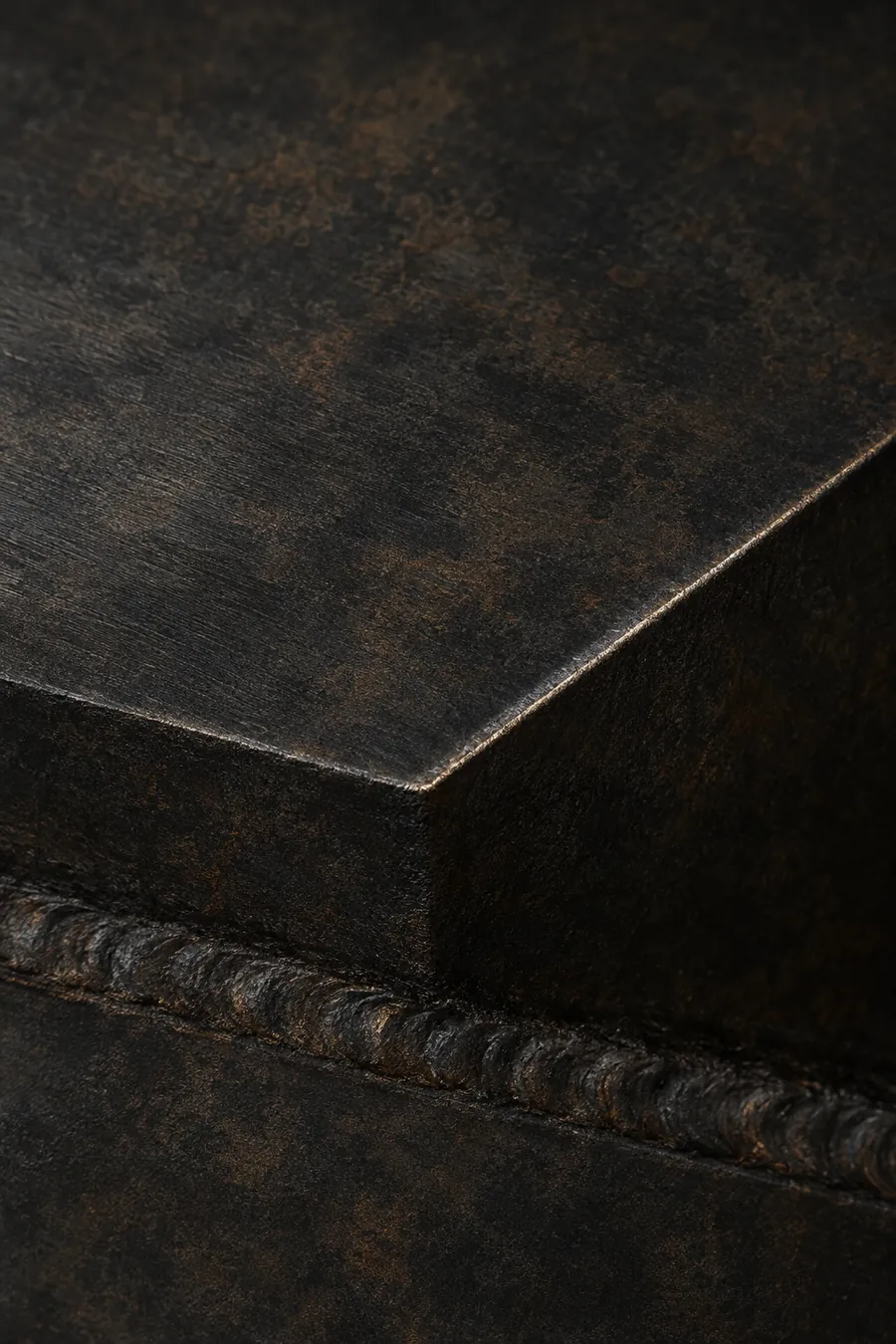
Mild steel, blackened by hand
Mild steel is low-carbon steel: soft enough to work honestly, strong enough that a 6mm plate leg will outlive the house. We cut, fold and weld it here, dress the welds back only as far as the design wants, then blacken the surface with heat and wax rather than spraying it.
The result is a dark, slightly mottled surface with depth to it, and one that ages. Fingerprints fade. A scratch can be waxed back. If you want something that will stay perfectly uniform for twenty years, we will powder coat it instead and tell you so.
Finishes
- Hand-blackened and waxed — our standard, warm and matte
- Raw mill finish, clear-lacquered — lighter, shows its rolling marks
- Powder coat in any RAL — for bathrooms, outdoors and high traffic
02 — Stone
Quartz for work, limestone for weight
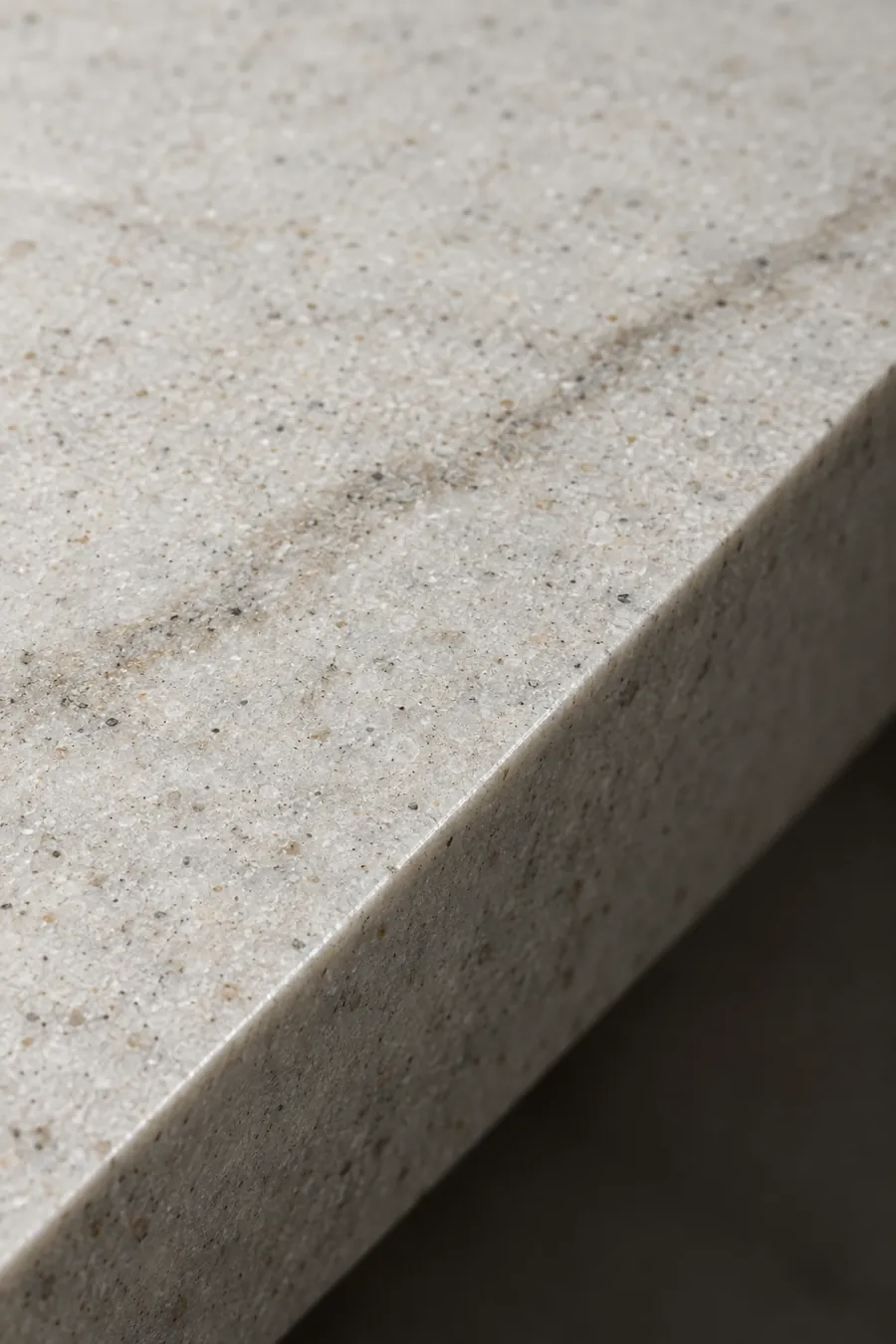
Engineered quartz is dense, non-porous and effectively maintenance free, which is why it goes on kitchen islands and anywhere a glass of red wine is likely. Honed rather than polished, so it reads as stone instead of as a worktop.
Natural limestone and sandstone are the opposite bargain: more beautiful, more porous, and they will patinate wherever life happens. On a coffee table that is the appeal. On a kitchen island it is a conversation we will have with you first.
Tops are templated to the finished steel frame rather than ordered in advance, so the reveal around the edge is even on all four sides.
03 — Timber
English hardwood, air-dried and chosen by board
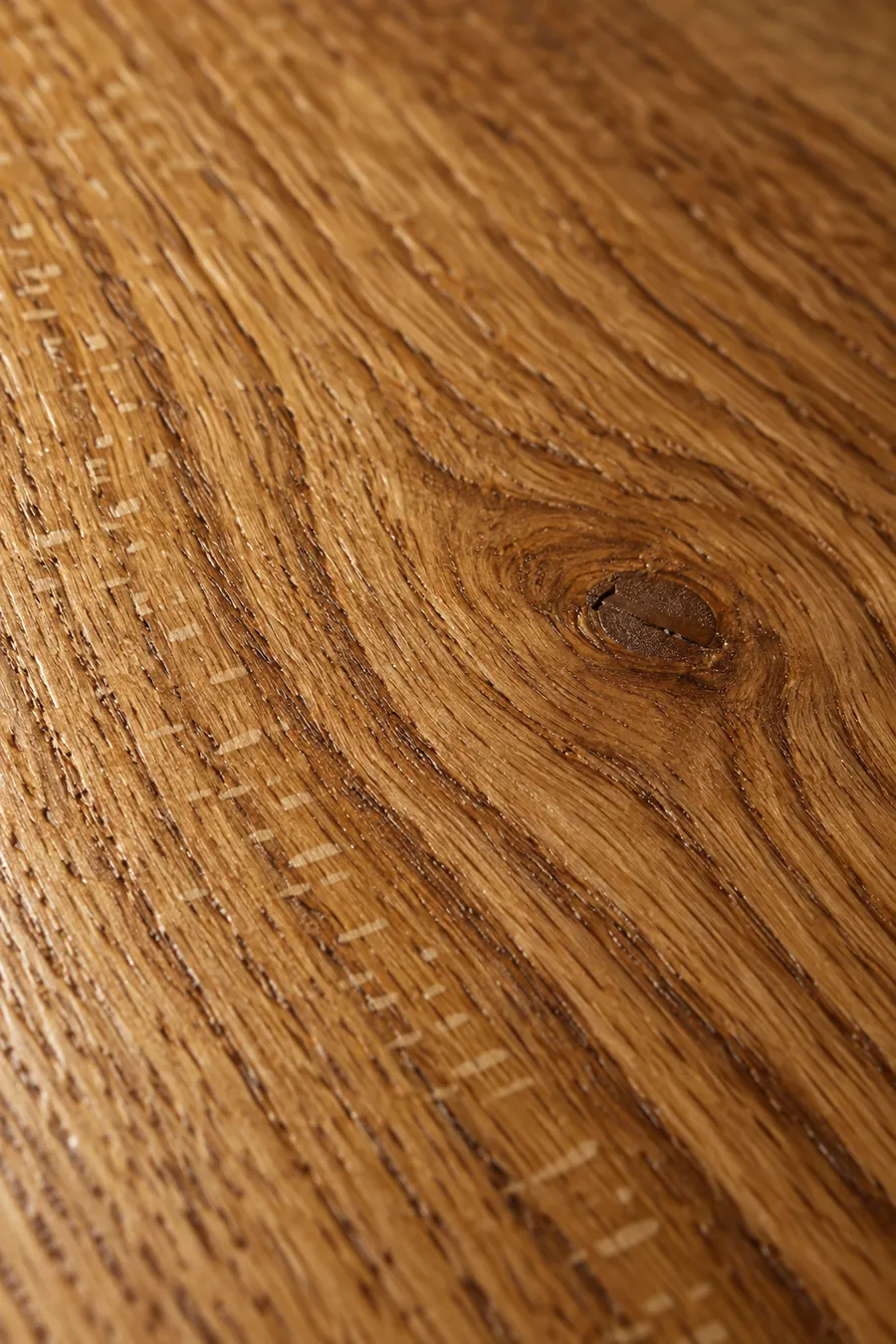
Oak mostly, with ash and elm when the piece suits them. Air-dried at the mill, then conditioned indoors here for weeks before it is machined, because a top that moves after delivery is nobody's idea of craftsmanship.
We work with the character rather than around it. Knots get filled and stabilised, not cut out. A shake gets a butterfly key across it. Finished with hard wax oil, which you can repair yourself with a cloth.
Looking after it
- Wipe spills rather than letting them sit — oak reacts to water and to iron
- Re-oil the top once a year, twice if it takes a lot of use
- Use mats under hot pans; hard wax oil is tough but not heatproof
Samples
Hold the materials before you decide
We will post a sample set — a blackened steel plate, a honed quartz offcut and two timber pieces — anywhere in the UK, free, with any live enquiry. Photographs of dark steel are not to be trusted.
From the barn
A note when something new leaves the workshop
Occasional letters — a finished commission, a run of offcut pieces, an open workshop day. Nothing more than once a month.