This is one commission, start to finish, with the dates and the dull parts left in. A 2.4 metre dining table in English oak on a blackened steel trestle, for a stone-floored kitchen in a converted farmhouse where the previous table seated six and the family is eight.
Week one — the room, not the table
The first conversation was almost entirely about circulation. Eight chairs need roughly 600mm each, and 900mm of clearance behind them to get past. The room allowed 2.4 metres of length but only if the table sat 150mm off-centre from the light above it, which meant moving a pendant — a five minute electrician's job that would otherwise have been discovered on delivery day.
We also measured the doorway, the turn at the bottom of the stairs and the height of the threshold. A finished 2.4 metre top does not negotiate a 780mm door diagonally. This one came in through a pair of garden doors.
Week two — drawing and a fixed price
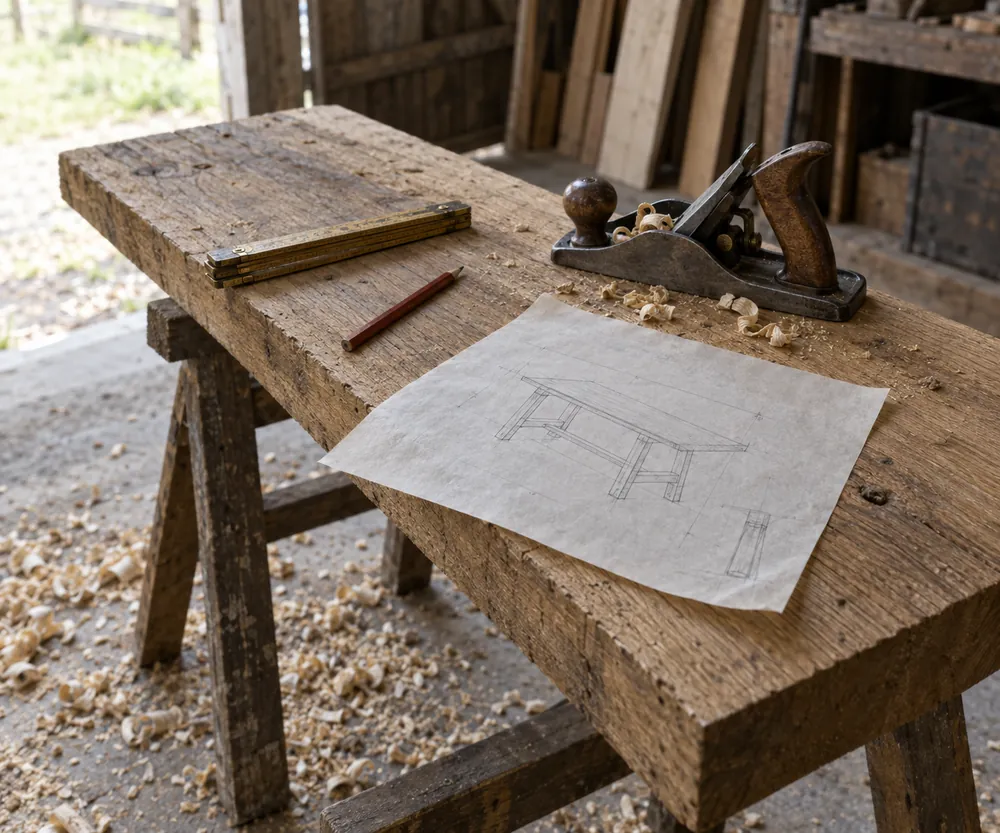
A scaled drawing, three trestle variations and a fixed quote. The client chose the heaviest of the three bases, which is usually what happens once the options are drawn side by side. Two rounds of changes are included; this one needed one, to bring the trestle inboard so that nobody sitting at the end had a foot in the way.
Deposit paid, slot booked for six weeks out. That gap is not idle — it is when the timber is bought.
Weeks three to six — the timber settles
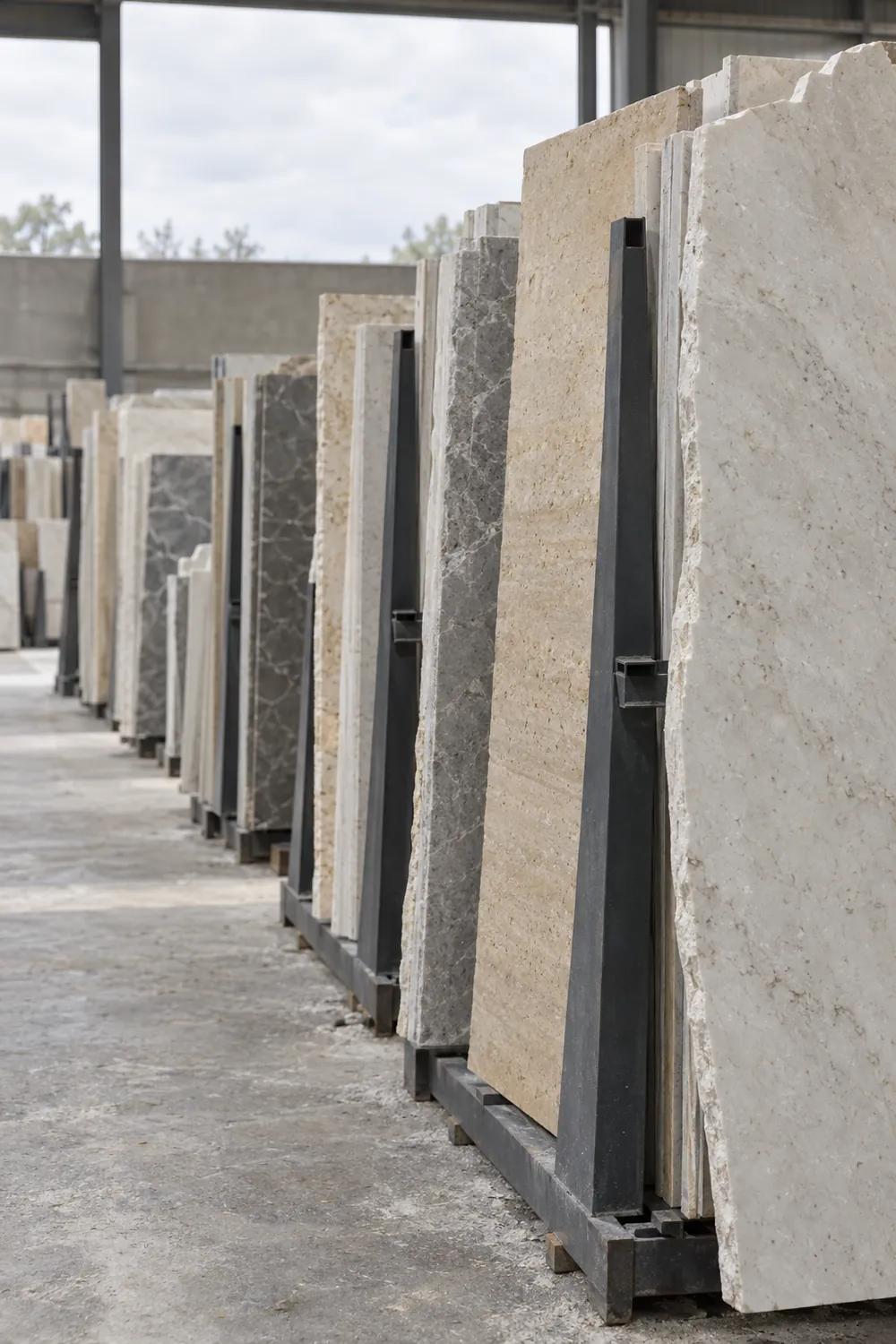
Four wide air-dried oak boards from a mill twenty miles away, brought into the workshop and stacked with spacers. They sat for a month. This is the least photogenic part of the job and the one that decides whether the top is still flat in three years.
Weeks seven and eight — steel
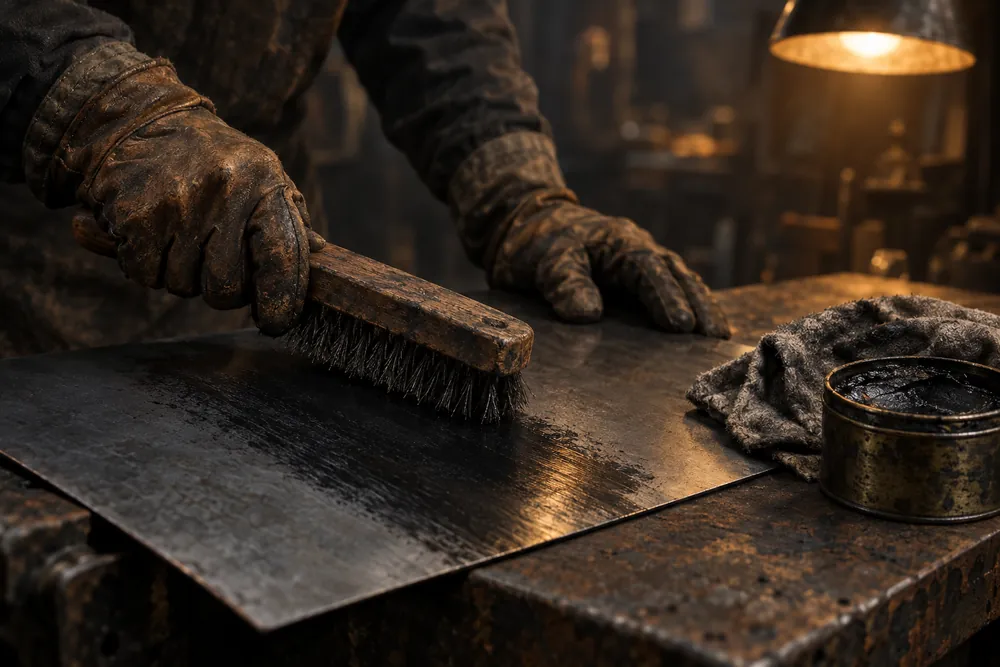
The base was cut, folded and welded in two days, then blackened over another two. Most of the remaining time went on dressing the welds to the right degree — not invisible, which would be dishonest about how it was made, but clean and even, which is the difference between a weld and a mess.
Weeks nine and ten — the top
Boards machined, jointed and glued in two halves, then a final pass to bring the halves together. One shake near the end of the widest board took a butterfly key in darker oak. Three coats of hard wax oil, denibbed between coats, with the last coat left an extra day because the barn was cold.
Week eleven — delivery
Two people, a van, a set of levelling shims for a floor that fell 8mm across the room, and twenty minutes to put it in place. The pendant had been moved. The chairs went past.
Eleven weeks, three materials, one drawing and one pencil line that was wrong the first time.