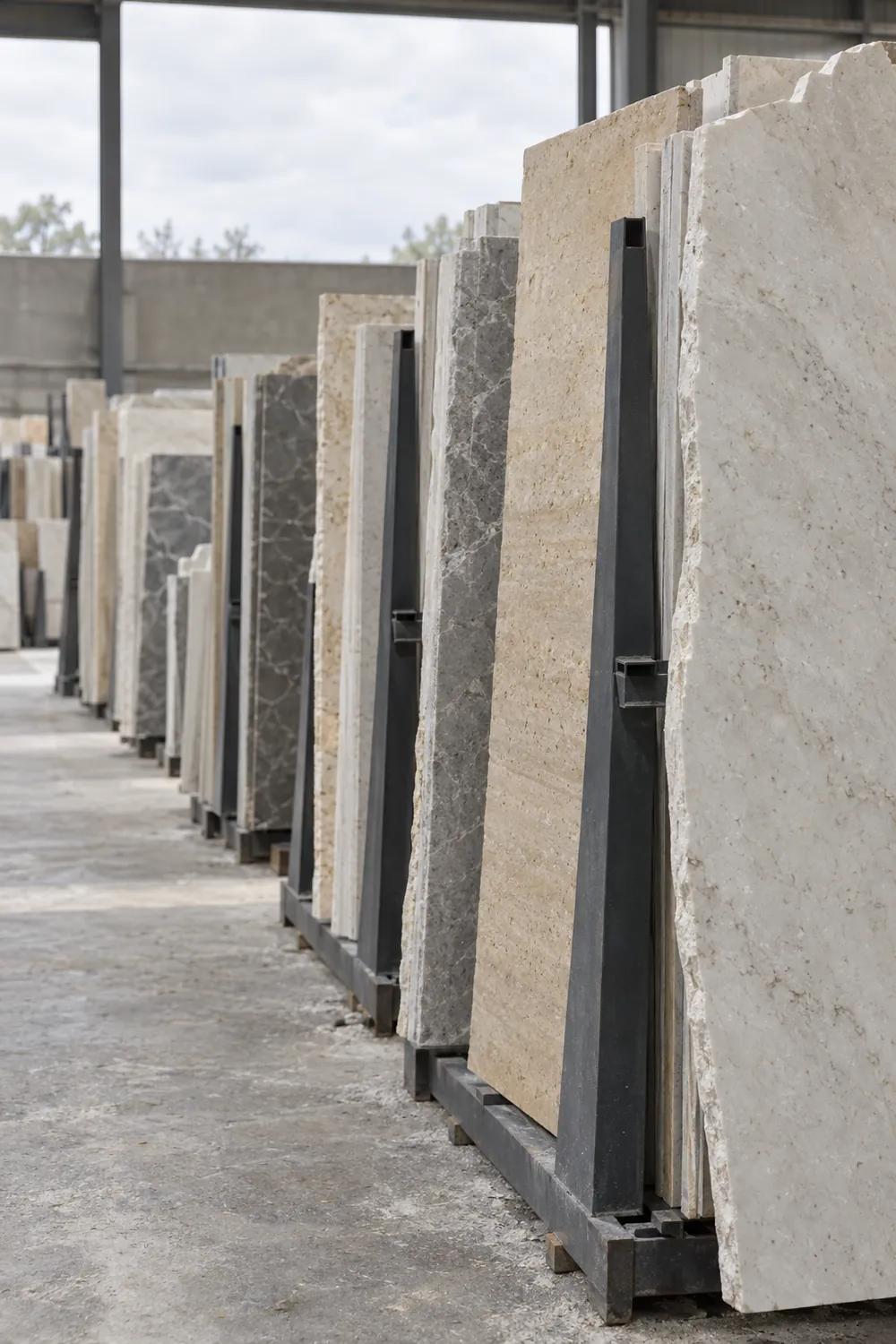
A stone yard is a difficult place to make a good decision. The slabs are racked upright under high diffuse light, wet from cutting or freshly polished, and standing at a scale that makes everything look magnificent. Almost nothing looks that good horizontally in a kitchen.
So we go with a process rather than an eye.
Decide the job before you decide the stone
Quartz and natural stone are not competing products, they are different bargains. Engineered quartz is roughly 90% ground quartz in a resin binder: dense, effectively non-porous, and indifferent to lemon juice and red wine. It is the correct answer for a worktop or an island, and we specify it honed rather than polished so it stops looking like a showroom.
Limestone, travertine and sandstone are porous. They will take a mark from oil, from wine, from a wet glass left overnight, and over years they will develop a patina that is either the whole point or a source of quiet irritation, depending entirely on the person. On a coffee table, a hall console or a fireplace they are wonderful. On a family island we will try to talk you out of them.
What we look at, in order
- Thickness and consistency. A slab that varies by 2mm across its length is a problem once it sits on a steel frame with a tight reveal.
- Where the movement falls. Veining looks different once the sink and hob cut-outs are taken out. We overlay the cut plan on a photograph of the actual slab before committing.
- The edge. A split-face or bush-hammered edge hides a lot; a crisp square arris shows every chip and needs a stone with a tight grain.
- The offcut. If there is enough waste for a matching console or a windowsill, that changes what the slab is worth.
Template last, always
The order matters more than the choice. We build and finish the steel first, then template the stone to the finished frame. Do it the other way round and you spend the installation chasing a 3mm discrepancy around a visible reveal, which is the difference between a piece that looks made and one that looks assembled.
Take it outside
The last thing we do at any yard is carry the sample out of the shed into daylight and lay it flat on the ground. Horizontal, in real light, next to the timber sample it has to live with. Perhaps a third of the time, the stone that won indoors loses.