Powder coating is the sensible answer. It is harder than hand-applied finishes, it is quicker, it is cheaper at any volume, and it will look exactly the same in ten years as it did on the day it left the line. If you asked a production manager how to finish mild steel furniture, that is the answer you would get, and they would be right.
We still blacken almost everything by hand. Here is the honest case for it, including the parts that count against us.
What blackening actually is
Mild steel straight off the rack has a blue-grey mill scale and a film of oil. Left alone in a British house it will spot with rust within a season. It needs something.
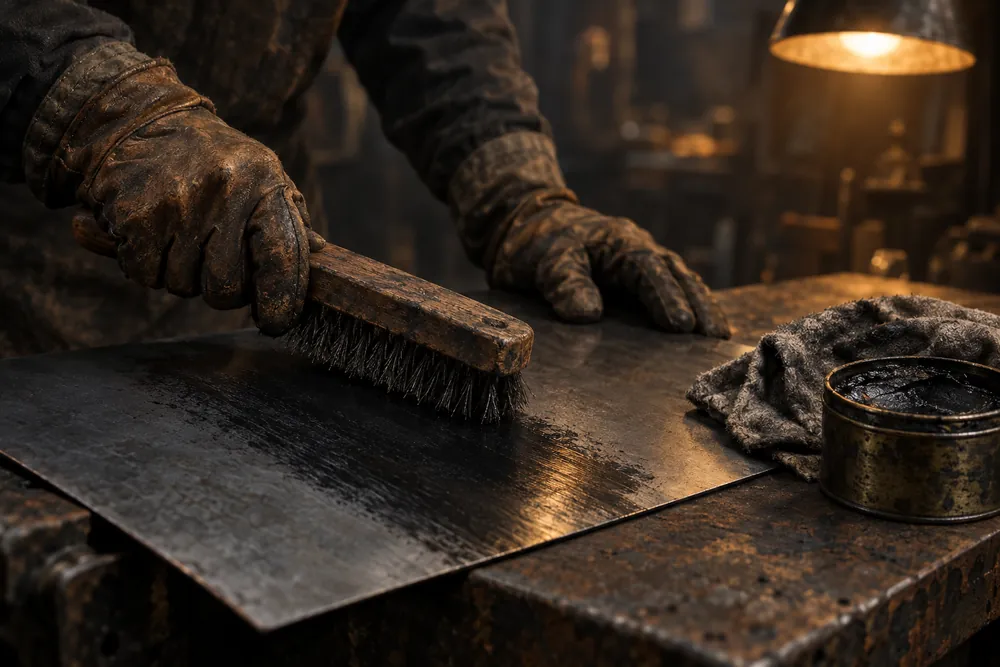
Our standard finish is heat and wax. The panel is cleaned back, brought up to temperature so the surface oxidises evenly into a deep charcoal, worked over with a wire brush, then fed with a dark wax while it is still warm enough to take it. It gets two or three coats, buffed between each. The whole process is closer to seasoning a pan than to painting a wall.
What comes out is not a flat black. It is mottled, slightly warm, and it changes depending on where the light comes from. On a trestle base it makes a heavy frame look lighter than it measures.
Why we accept the downsides
There are three, and we would rather say them out loud than let you discover them.
- It is softer than a coating. A dragged buckle or a dropped pan will mark it.
- It is not uniform. Two panels from the same sheet will not match exactly, and a repair will never be invisible on day one.
- It needs feeding. A wipe of wax once a year, less on a shelf, more on a desk edge where forearms sit.
Against that: it can be repaired at all. A scratch in powder coat is permanent unless the whole piece goes back to be stripped and resprayed, which in practice means it stays scratched. A scratch in a waxed surface is a five minute job with a cloth, and it blends within a month because the surface was never uniform to begin with.
Where we do not use it
Bathrooms, boot rooms, anything going outside, and anything going into a house with a genuinely hard-wearing brief — a family kitchen with teenagers, a holiday let, a restaurant. In those cases we powder coat and say so on the quote. A finish that needs annual attention is a bad recommendation for someone who does not want to give it any.
The test that settles it
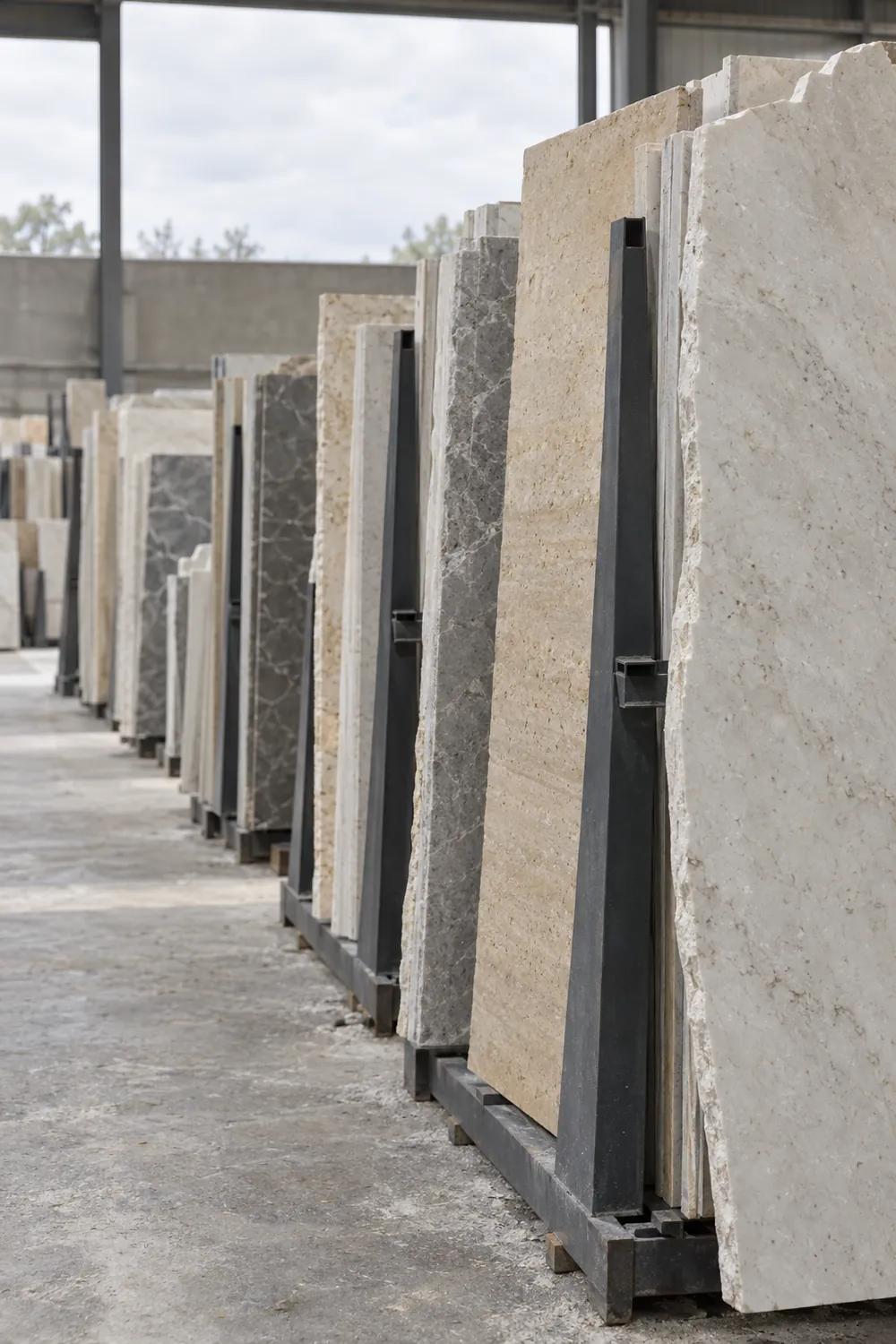
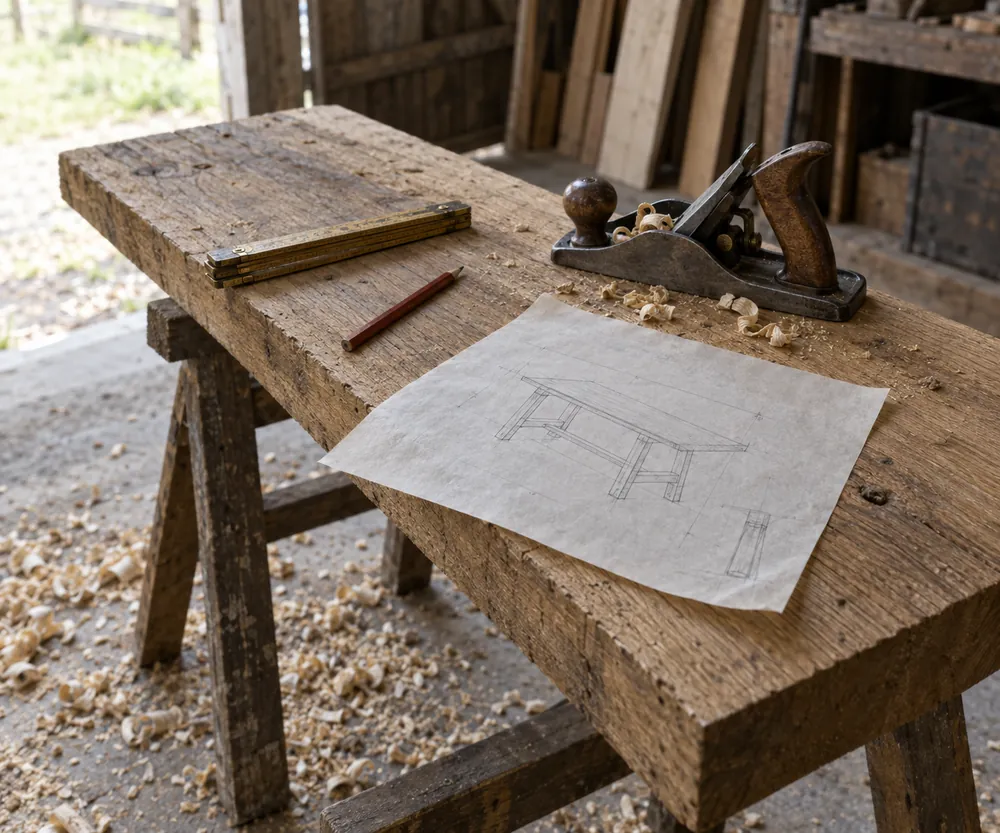
We send both. A hand-blackened plate and a powder-coated one, in the same box as the timber and stone samples. Put them on the floor of the actual room for a week and look at them in evening light.
Most people choose the hand-finished plate, and a meaningful minority do not. Both are the right answer — they are just answers to different questions.